Showing posts with label China. Show all posts
Showing posts with label China. Show all posts
Thursday, January 17, 2019
Monday, December 23, 2013
HORMONE in Hairy Crab
14/10/11: Crabs in Hong Kong found to contain excessive estrogen

One quarter of Chinese crab samples tested in Hong Kong have been found to contain excessive amounts of the female hormone estrogen. Health experts said consumption of three crabs each day would result in ingesting amounts of estrogen exceeding the safety levels set by the World Health Organization.
SGS Hong Kong, the local branch of Swiss testing and certifying firm SGS Group, recently gathered more than 30 samples of Chinese mitten crabs, also known as hairy crabs, from the mainland. About a quarter of them were identified to contain excessive estrogen levels, according to a report from the National Business Daily in Shanghai.
SGS staff said however that more time is still needed to verify if the estrogen contains prohibited elements and whether these were natural substances or synthetic additives. They also did not identify from which parts of China the crabs came.
Certain hormones can be used by crab raisers or fishermen as they can make young specimens gain weight faster and achieve a higher turnover, but this may also bring health risks for consumers.
The report has prompted officials at the Hong Kong Food and Environmental Hygiene Department to heighten alerts on imports of the pricey crabs. They stated that they would visit crab farms in China for onsite inspections if necessary.
Chinese food and quality inspection authorities as well as crab suppliers, especially those from Jiangsu’s well-known Yangcheng Lake area, promised to step up inspections to better protect consumers and safeguard the interests of suppliers.
Yang Weilong, head of the Yangcheng Lake Crab Association in Suzhou, Jiangsu province immediately issued a public announcement that crabs from the Yangcheng Lake area are safe as all crab-raising operations are meticulously monitored by local food and health agencies.
Shipments overseas, including those to Hong Kong, also have to undergo extra inspections for customs clearance, he stressed. Yang however was only willing to vouch for the crabs from his own area, the most famous source for the expensive crabs.
Crab suppliers in other areas in China often disguise their products as coming from the Yangcheng Lake district near the Yangtze in order to fetch higher prices.
Previous incidents and media reports about crabs contaminated by illegal drugs or chemicals had caused heavy losses for suppliers, especially during the crab mating and peak supply season in September and October, after authorities in Taiwan and Hong Kong temporarily suspended import permits.
To avoid a possible wider impact on consumers and the image of Yangcheng crabs, officials at the Jiangsu Entry-Exit Inspection & Quarantine Bureau told reporters that they have given priority to the safety of crab products and stepped up inspections.
SHANGHAI officials said no excessive level of estrogen has been detected in hairy crabs in local markets following media reports about excessive hormone found in hairy crabs in Hong Kong.
Chen Qiwei, the Shanghai government spokesman, told reporters at a press conference today that test results of all the samples collected from the local markets were satisfactory.
Food inspectors checked for more than 30 contents in the samples, including diethylstilbestrol, a type of estrogen. The inspection is carried out every three months by the city’s agricultural commission, food and drug administration, and administration for industry and commerce.
Chen said the three departments will strengthen the inspection of hairy crabs to ensure food safety.
It was reported on Tuesday that one-fourth of the 30 hairy crab samples tested in Hong Kong showed an excessive amount of hormone with the highest reaching 100 micrograms.
SGS, an international inspection company, warned that eating three hairy crabs with the highest level of hormone will surpass the safety limit suggested by the WHO.
However, it admitted that it used a new testing method in the check and was unable to tell if the hormone was natural or synthetic.
The Hong Kong Food and Environment Hygiene Department said it will release a full report of its hair crab check soon.
Why is estrogen at excessive level dangerous to the body?

Like all steroid hormones, estrogens readily diffuse across the cell membrane in the human body. Once inside the cell, they bind to and activate estrogen receptors which in turn modulate the expression of many genes.
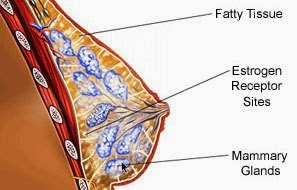
While estrogens are present in both men and women, they are usually present at significantly higher levels in women of reproductive age. They promote the development of female secondary sexual characteristics and are also involved in the thickening of the endometrium and other aspects of regulating the menstrual cycle. In males, estrogen regulates certain functions of the reproductive system important to the maturation of sperm and may be necessary for a healthy libido.

After menopause, women experience a reduction in estrogen and can face a host of problems like vaginal dryness, memory problems, hot flashes, fatigue, irritability, sudden surge of cholesterols and lower bone density. Most menopausal women are introduced to estrogen replacement therapy to boost the estrogen levels.
Sustained high levels of stimulating estrogen in women increases the risk that of developing endometrial cancer (cancer of the lining of the uterus) and the hormone can produce excess amounts of superoxide compound in the brain. Other associated symptoms are fluid retention, flagging energy, bloating and weight gain.
Those who had the uterus removed are usually given another medication called a progestin to take along. This may decrease the risk of developing endometrial cancer, but may suffer from side effects like breast cancer, heart attacks, strokes, blood clots in the lungs or legs, breast cancer and dementia.

Note that hormonal imbalance, especially from estrogen dominance, is not limited to women. Men are bombarded constantly with environmental hazards of environmental estrogen mimicking chemicals, known as xenoestrogens. When they interact with cellular receptor sites, the effects of true estrogen are blocked. To make matters worse, these endocrine disruptors lodge in fat cells where they are resistant to breakdown. They can act in a synergistic effect with other endocrine disrupters to create havoc at the cellular level, such as breast cancer for women and prostate cancer for men.
The most common sources of xenoestrogens include:
a. Commercially-raised animal products (eg. hairy crabs, poultry, salmon)
b. Styrofoam products, plastics and canned products (with plastic lining)
c. Personal Care Products (cosmetics, lotion, perfumes)
d. Oral Contraceptives
e. Pharmaceutical medications
f. Food Additives & preservatives
g. Laundry & Dishwashing detergents
h. Household cleaners & air fresheners
i. Pesticides & Herbicides
Effective ways to reduce estrogen loads:
+ A simple strategy is through diet, especially by increasing the intake of cruciferous vegetables, which include broccoli, cauliflower, cabbage, kale, bok choy, turnips, and mustard. They are known to contain indole-3-carbinol, a phytochemical that enhances environmental estrogen elimination, improves hormonal balance and protects against cancer.
+ Red wine is fermented with the resveratrol-containing grape skins present during fermentation. This substance blocks the effect of estrogen and can help to prevent the malignant growth of breast cancer in women.
+ Avoiding commercial meats and dairy products from hormone (bovine) injected animals is another important measure.
+ To help eliminate the toxins accumulated in the liver, drink lots of pure water from glass containers together with milk thistle whilst taking in more fibres from whole grains and legumes. Expedite the detoxification process in the cells with alkaline foods may be necessary for the average people.
Source: http://vivajoyhealthclub.wordpress.com/2011/12/16/still-wanna-eat-hairy-crabs/
Source: http://vivajoyhealthclub.wordpress.com/2011/12/16/still-wanna-eat-hairy-crabs/
Monday, October 21, 2013


Monday, September 16, 2013
20,000 kilos of fake beef seized in Xi'an

The pork was treated with chemicals, including paraffin wax and industrial salts, to make it look like beef.
The factory sold over 1,500 kg of the fake beef to local markets at around 25 to 33 yuan per kilo. Six workshops producing the 'beef' have been shut down and the meat seized as evidence.
The news will come as particular concern to Xi'an's large Muslim community, who may have been buying some distinctly non-halal beef.
Source: http://shanghaiist.com/2013/09/14/20000_kilos_of_fake_beef_seized_in_xian.php
Saturday, October 15, 2011
“Dog Meat Festival” Cancelled After Popular Public Opposition
The following call to action was reposted over a 100 thousand times on popular Chinese microblogging service Sina Weibo (similar to Twitter), placing it amongst the most forwarded posts for several days this past week, and accumulating over 20 thousand comments by Weibo Users…
@君常在:
[10.18 Bloody Massacre] Oppose the “Zhejiang Jinhua Dog Meat Festival”. The “Save Zhejiang” society proposal/petition + Four point plan + Hotlines for the Asian media. (Doesn’t matter if you are a celebrity or an ordinary common person, please forward this as each time is one more sliver of hope). This is not a festival, this is a massacre! Call on China to pass animal protection laws!
The link leads to a post on a Chinese movie blog that protests the city of Jinhua in Zhejiang province of China holding a “Dog Meat Festival” next month on October 18th, similar to the annual beer festival in Qingdao except involving dog meat and people who enjoy eating dog meat.
Due to popular opposition, the festival has already been cancelled and it appears that the campaign now is to ask the Jinhua local government what will happen to the dogs that were originally prepared for the festival.


 Source: Chinasmack
Monday, October 10, 2011
Additives Turn Ordinary Rice into Gourmet Wuchang Rice

FAKE screams the headline on 14 July 2010, Tibet Business Daily.
Aromatic rice from Wuchang, Heilongjiang Province, is considered one of the best types of rice in China. In 2009, the General Administration of Quality Supervision, Inspection and Quarantine recognized the rice as a local brand, and it sells for considerably more than ordinary rice.
Just 800,000 tons of Wuchang Rice are produced every year, but up to 10 million tons are sold. According to reports by CCTV and Xi'an Evening News reprinted in today's Tibet Business Daily,rice processors in Xi'an have been adding fragrance to ordinary rice and selling it as Wuchang Rice:
Over the course of several days, this reporter visited a number of workshops in and around the Xi'an Grain and Oil Wholesale Market. Although much of the rice used by these processors bore the Wuchang label, it was actually a combination of rice from Hubei, Jiangsu, and the northeast that was masquerading as Heilongjiang Wuchang Rice.
To give the fake rice its aroma, a fragrance was added during processing. This was an open secret. Workers said that half a kilo of fragrance could aromatize ten tons of rice.
Managers in charge of several workshops said that because its price was cheaper than true Wuchang Rice, their rice sold quite well, and was mainly marketed in Henan, Shanxi, Sichuan, Qinghai, and Gansu.
Source: Danwei
Related site:
http://epaper.chinatibetnews.com/xzsb/html/2010-07/14/content_196475.htm
http://epaper.chinatibetnews.com/xzsb/html/2010-07/14/content_196489.htm
http://www2.chinadaily.com.cn/cndy/2010-07/14/content_10102476.htm
Saturday, October 8, 2011
Discarded Food Waste Slop Recycled Into Cheap Recycled Cooking Oil (Swill Oil)
Slop oil is “refined” from slop or swill, which is the leftover “food” that people and restaurants throw away. Another name is “地沟油”, “gutter oil” or “drainage oil”, because the oil is recovered from the sewer drains coming out of restaurants. Usually, slop or swill is fed to pigs but some unscrupulous people will gather the slop and “recycle” the oil in the slop to sell as cooking oil. Of course, this cooking oil is known as “slop oil” and it is cheaper than fresh cooking oil. Many street vendors who cook snacks (especially fried foods) may use this “slop oil” to save money and keep their costs low.
From NetEase:
Why has harmful slop oil once again flooded Wuhan?
(The bold black-hearted boss even guarantees: “Slop oil is safe to eat”). In March of this year, the internet exposed the Wuhan slop oil public health safety incident (refer to relevant report: “My god! Malicious Wuhan oil factories selling slop oil guarantee safe to eat“). The problem attracted heated discussion and criticism from netizens around the country. The problem also very quickly attracted the Wuhan city government’s attention and the relevant department committed additional people and man hours, conducting a city-wide special rectification operation that lasted over a month and investigated a large amount of slop oil (refer to relevant report: “Wuhan emergency seige of slop oil scenes (follow-up report)“). Yet, right when the people feel they can relax, who would have thought that illegal refining of slop oil would stage a comeback, and flood Wuhan.
At the end of September to beginning of October, 《王浩峰聚焦》["Wang Hao Feng Focus"] once again conducted an undercover investigation, witnessing large numbers of hideouts for the illegal refining of slop oil, with the hideouts on one street in the HongShan district being so numerous as to be innumerable; when it comes to refining slop oil, there are no procedures, and whoever offers the highest price is whoever it will be sold to.
This quickly, the problem has resurged. There are city residents who say this is not strange, is common, and is expected. With the supervision of some supervisory departments these days being “a gust of wind”, a problem is exposed, the leadership [government officials] will make some comments, there will be some on-site investigations, but they will see how the wind blows as they investigate and if no one continues asking and no one is after their positions/jobs, the investigations will stop there. Then, they will continue their own (tenured) lives of officialdom. [They will] let the same old problems wait until the next time they are exposed before saying anything. If they are not exposed, [they] won’t say anything.


Source: Chinasmack
Related article: http://www.shenzhenstuff.com/forum/topics/swill-oil-scoopers?id=1343813%3ATopic%3A3568163&page=1#comments
Sunday, April 4, 2010
Tuesday, March 9, 2010
Awas!!! Ayam Goreng Dari 'Ayam Mati' di China
Pertengahan bulan ini, kebanyakkan premis-premis perniagaan di Malaysia biasanya cuti seminggu. Dimasa inilah para pekerja dibawa melancong oleh majikan masing-masing. Tak terkecuali pekerja Melayu, kalau anda dibawa melancong ke China berhati-hatilah dengan makanan disana, terutamanya ayam goreng. Nak tau mengapa jom tengok gambar-gambar di bawah ini…
 Waktu pagi meraih ayam disekitar kampung.
 Pekerja diarahkan mencari ayam dari rumah kerumah, ingat bukan ayam hidup.
 Harga 1 Ekor ayam mati 1 RMB (dollar hongkong) dan akan dijual pada kembali dengan harga 9 RMB (dollar hongkong) setelah pemrosesan.
 Mudahkan! tak payah sembelih masuk jer dalam karung tu.
 Inilah tempat memproses ayam yang dibeli tadi…bersepah bangkai ayam.
 Dan dilantai…
 Tu dia…ayam separuh sedar pun ada kat situ siap dengan pengawalnya lagi!
 Dari kuali besar yang berkarat ayam tadi dicabut bulunya.
 Pekerja tekun menanggalkan bulu ayam.
 Lihat dibelakang pekerja, longgokan ayam yang berwarna merah keemasan.
 Tab mandi yang diubah suai untuk membilas ayam yang dah dicabut bulunya.
 Mengenakan sandal berjalan di antara ayam sebelum proses pewarnaan. Proses mewarnai dengan cat sehingga menyerupai daging ayam yang segar mugar.
 Dan sekarang siap untuk disajikan “AYAM GORENG SPESIAL” – credit dari – haxims.blogspot.com
Monday, December 7, 2009
Manufacturing Fake Eggs
In China there are fake schools and classes that teach a variety of blatant fraud technology, even eggs can be modulated by chemical materials, but also be able to fry cook, is currently the most popular False course.

 Step 1: Modulation of raw materials
Using 7 kinds of chemical materials. Fake egg was made from calcium carbonate, starch, resin, gelatin, alum and other chemical products.
 Step 2: Egg production
Raw egg into the mold to 2 / 3 full, put calcium chloride, colouring die, the egg appears on the film been announced.
 The 'yolk' is shaped in the round mould. 'Magic water' containing calcium chloride is used. By adding a yellow pigment and become raw egg yolk.
 Step 3: Fake egg shape
In the mold into 1 / 3 raw egg white, like the first package, like dumplings into the egg yolk, egg white into another, into the magic water, a shell eggs will come slowly. Naked egg shape to 1 hour to dry after washing with water, at shells ready.
 Step 4: Shell
Sewing lines through the use of eggs, immersed in paraffin wax, calcium carbonate, such as modulation of the eggshell into a solution, repeated several times until the shell a little dry, immersion in cold water pumping line shape, this point, the egg has been put on a false cloak, You're done.

Hard shells are formed by soaking in paraffin wax onto the egg, which are then left to dry.

Oh yeah The Egg is ready. The artificial egg shell is very fragile and break easily but who cares!!
Look so real!!

Many small bubbles is formed during frying the egg but not many people can tell the difference. The egg look exactly the same, and the eggs taste better than real but you are adding to the statistic of food poisoning person.

Why make fake eggs ? Because of money.
The cost of fake egg is only 0.55 Yuan/kg, while the true eggs' market price is 5.6 Yuan/kg.
Cases of problem foods and food poisoning are widely reported in Mainland China over the last few years. In 2001, there were 185 cases of food poisoning, affecting about 15,715 people and causing 146 deaths. The cases doubled in 2002. In 2003, the number of reported cases was ten times more than that in 2001, and the number of people suffered was as high as 29,660, including 262 deaths Now In Sept 2008 Nearly 53,000 Chinese children sick from contaminated milk; 4 have died.
Subscribe to:
Posts (Atom)

 Posts


